
01
164 frames and one scroll
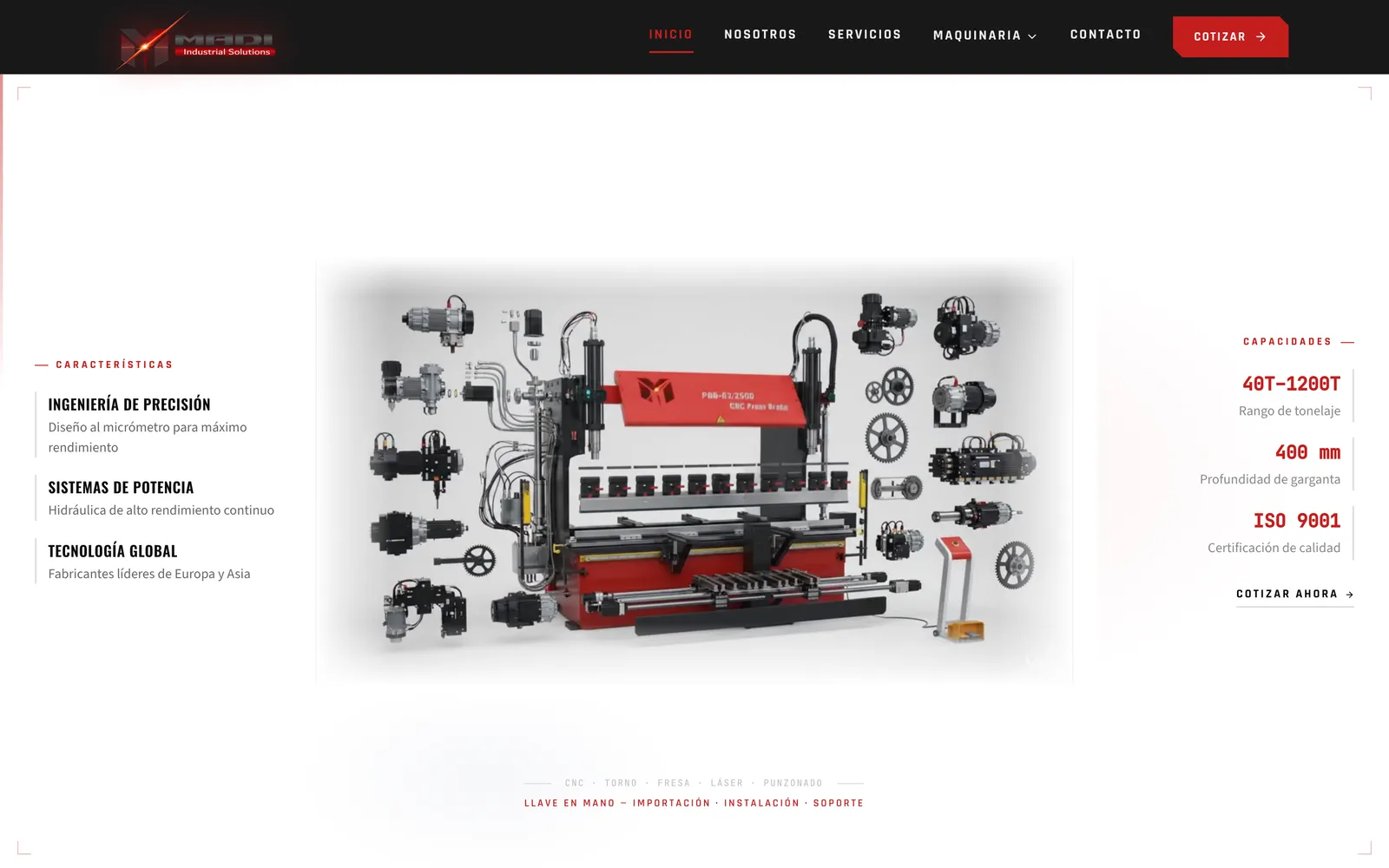
The PB6-63 press, part by part
The hero stays put and the machine is painted frame by frame. Scroll, and the red press opens into parts that float there, each with its specs beside it.


What we did
Their palette
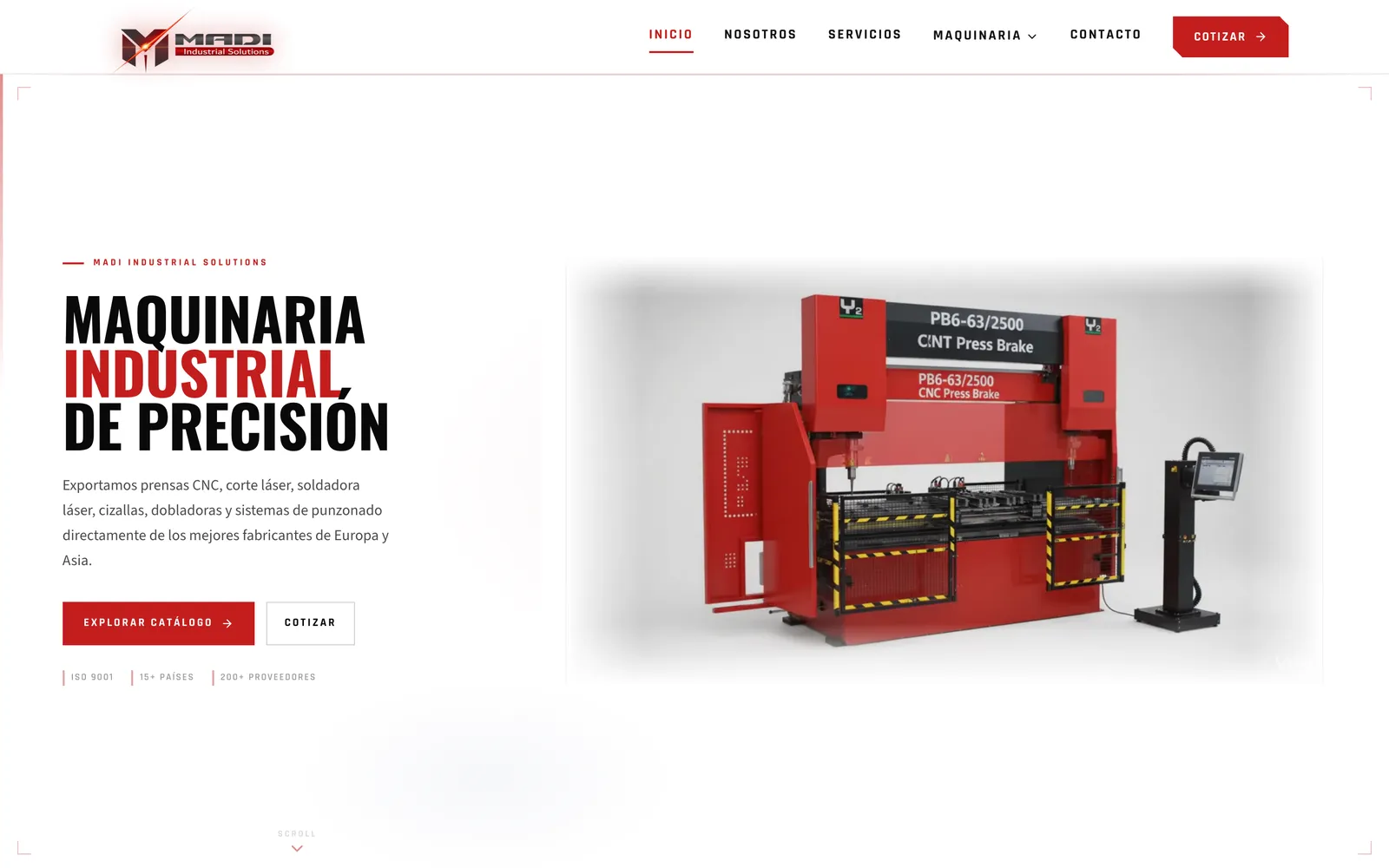
MADI brings in metalworking machinery from Europe and Asia —CNC press brakes, shears, lasers, plate rollers— and installs it, services it and trains the people who'll use it, in Mexico and Chile. They sell machines that weigh many tonnes, and nobody asks the price of something like that without a good look first.
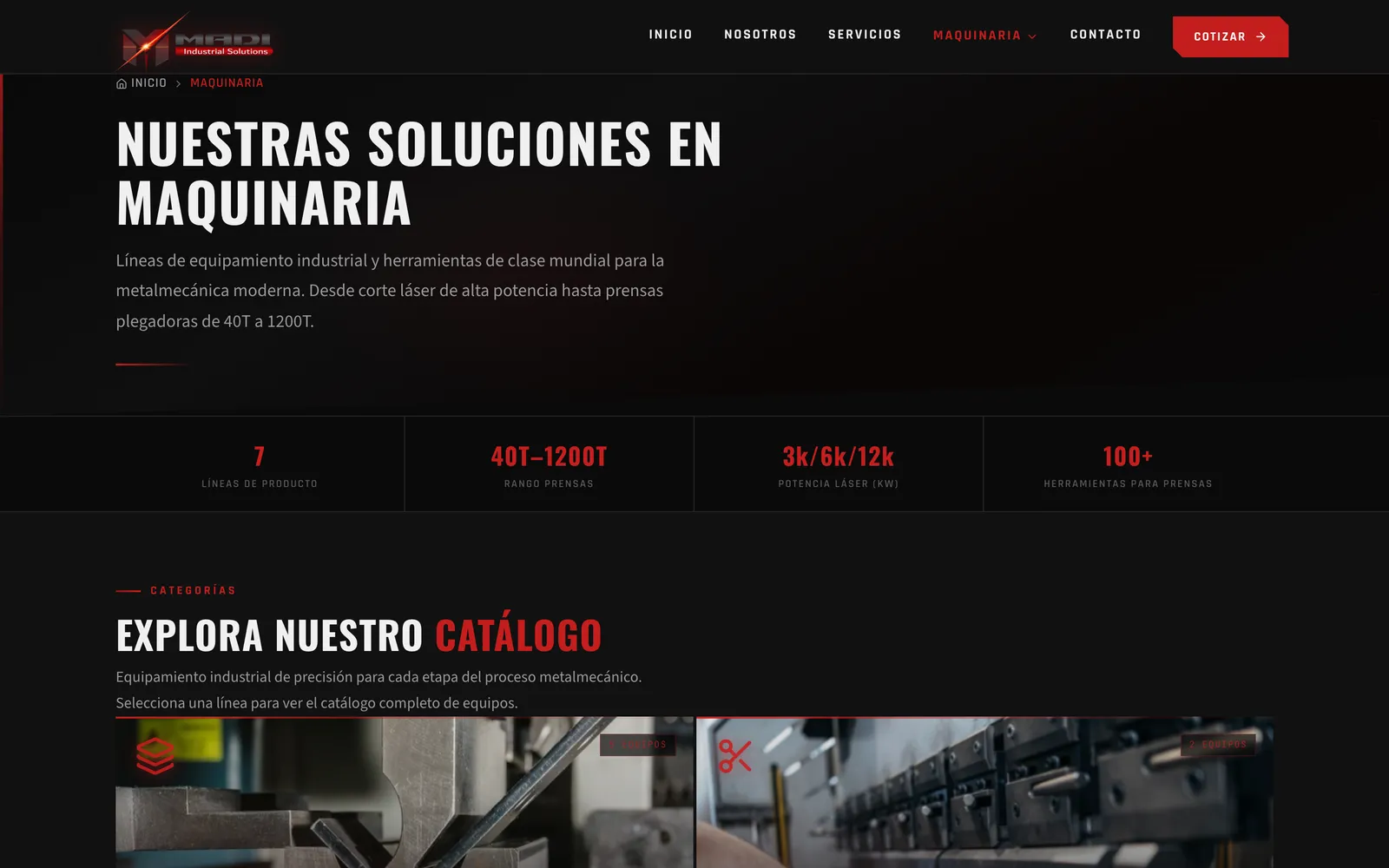
So the homepage opens with a press brake that comes apart as you scroll. And the catalogue goes from seven product lines to 23 machines, each with its spec table and its quote button.


01
The PB6-63 press, part by part
The hero stays put and the machine is painted frame by frame. Scroll, and the red press opens into parts that float there, each with its specs beside it.
02
Tonnage, length, axes and controller
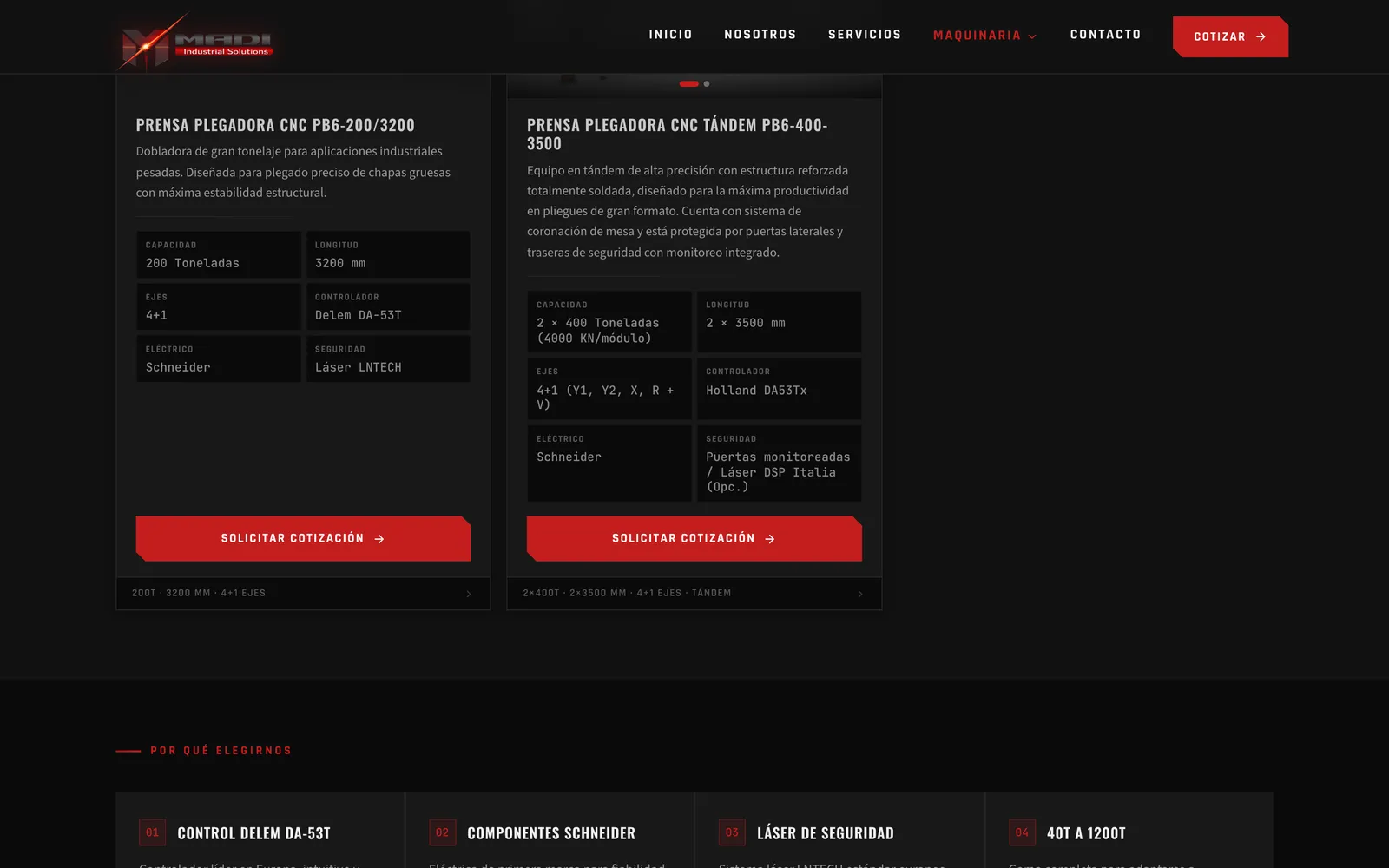
Every line has its page and every machine its table. The biggest is a 2 × 400-tonne tandem, which is easier said than lifted. And every sheet ends in its quote button.
03
What a plant manager asks
Specs go in a table, in a monospaced font, like a machine's rating plate. That way you can compare them at a glance.
04
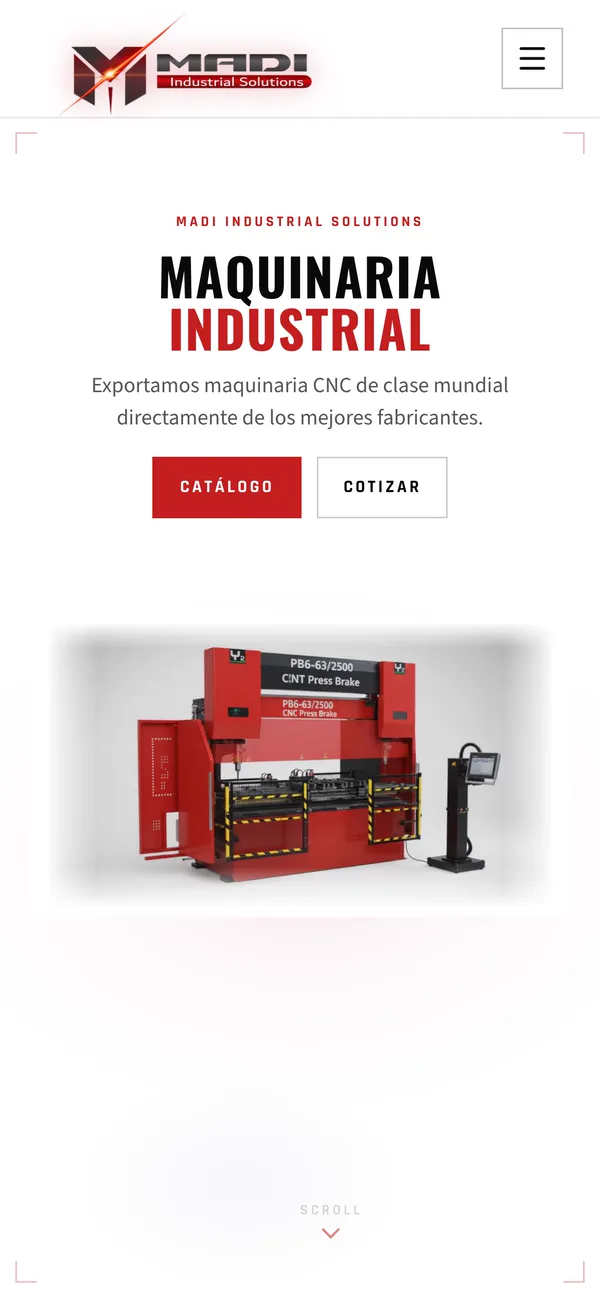
The exploded view, upright too
The press rearranges itself for a vertical screen and the catalogue scrolls under a thumb.
Heads-up: load times are for the homepage, measured on desktop on 14 October 2026 with no network throttling. A rough guide, not a Lighthouse score.
Half an hour, free, with the people who'd build it. And no “we'll get back to you” at the end.